
 Crypto & retirement
How Is Cryptocurrency Taxed? A Retirement Investor's Guide
The IRS treats crypto as property, so most transactions trigger capital gains or losses. This guide breaks down taxable events, short- vs long-term rates, staking and mining income, cost-basis methods, reporting forms, and the one move that makes all of it disappear: holding crypto in a retirement account.
Crypto taxes feel complicated mostly because of one surprising fact: the IRS doesn't treat crypto like money. Once you understand that, the rest follows logically.
Crypto is property, not currency
The IRS treats cryptocurrency as property — more like a stock or a house than like dollars. That single rule drives everything: when you dispose of property at a gain, you owe capital-gains tax; at a loss, you may claim a deduction.
What counts as a taxable event
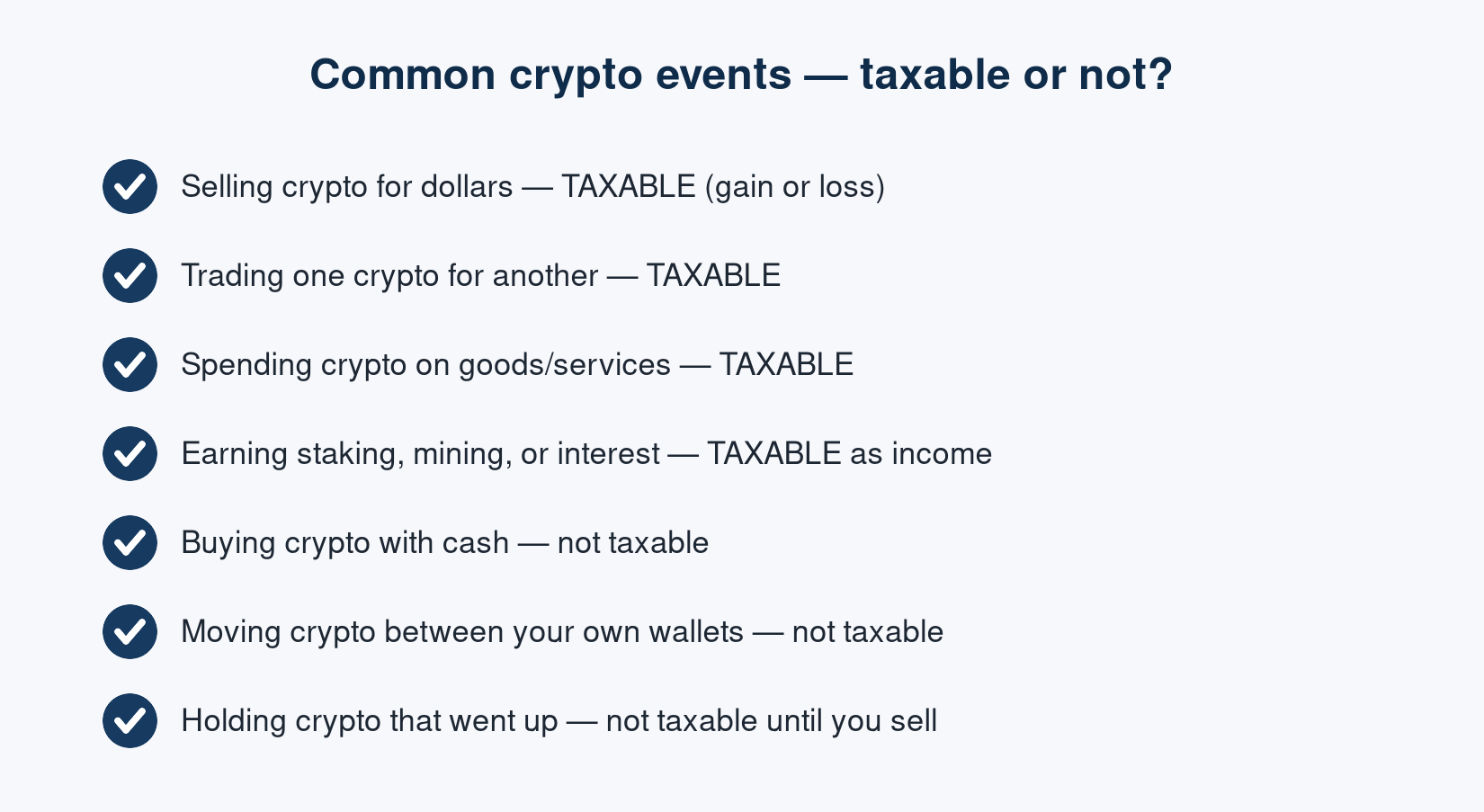
A 'taxable event' is any time you dispose of crypto. The tricky part is that trading one coin for another counts — even if no dollars are involved.
Short-term vs. long-term: the biggest lever
How long you held the crypto before selling determines the rate you pay — and the difference is large.
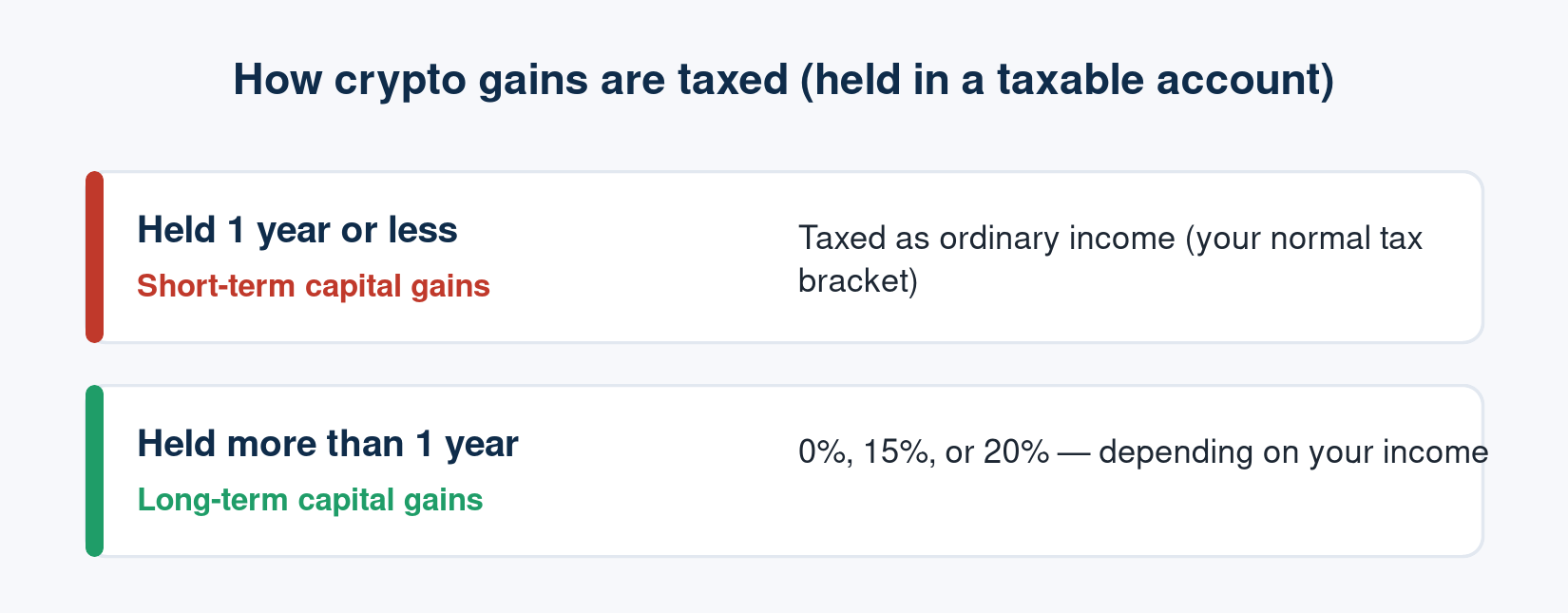
Crossing the one-year mark can cut the tax on a gain dramatically. For many investors, simply waiting to pass twelve months is the single most valuable tax decision they'll make.
Income from staking, mining, and rewards
Rewards from staking, mining, or crypto interest are generally taxed as ordinary income at their fair market value when you receive them. Then, if you later sell those coins, that's a separate capital-gains event measured from that starting value. In short, reward income can be taxed twice-over in two different ways — once as income, once (later) as a gain or loss.
Cost basis and lot selection
Your cost basis is what you paid (including fees). Your gain or loss is the sale price minus basis. If you bought at different times and prices, the lots you choose to sell can change your tax bill — methods like specific identification let you sell higher-basis coins first to minimize gains. Good records are essential; the IRS is increasingly focused on digital-asset reporting.
How retirement accounts change everything
Here's the punchline for retirement investors: inside an IRA or 401(k), trades within the account are not taxable events. You can rebalance without a tax bill. A Traditional account defers tax until you withdraw; a Roth makes qualified withdrawals tax-free. This is the core reason to consider holding crypto in a retirement account rather than a taxable one.
Reporting and forms
- Capital gains and losses go on Form 8949 and Schedule D.
- Crypto income (staking, mining) is reported as ordinary income.
- Exchanges are beginning to issue Form 1099-DA for digital-asset transactions — expect more third-party reporting going forward.
- Keep dated records of every buy, sell, trade, and reward.
This is general information, not tax advice. Crypto tax rules are evolving — work with a qualified tax professional for your situation.
Educational information only — not financial, tax, or legal advice. Crypto is volatile and speculative; consult a qualified professional about your situation.
Comments
No comments yet — be the first to share your thoughts.
Sign in or create an account to comment.