
 Crypto & retirement
How Much Crypto Should Be in Your Retirement Portfolio?
There's no official number, but a disciplined framework beats guessing. This guide covers the 'only what you can afford to lose' rule, common 1–5% guardrails, how age changes the answer, rebalancing, and dollar-cost averaging into a position without trying to time the market.
Crypto's return potential is exciting; its volatility is not. The whole game in a retirement portfolio is sizing the position so the upside can help you without the downside wrecking your plan.
Start with 'only what you can afford to lose'
Bitcoin has fallen 50%, 70%, even 80% from its peaks and stayed down for years at a time. Before you decide on a percentage, decide on a feeling: your allocation should be small enough that a brutal drawdown is disappointing, not devastating.
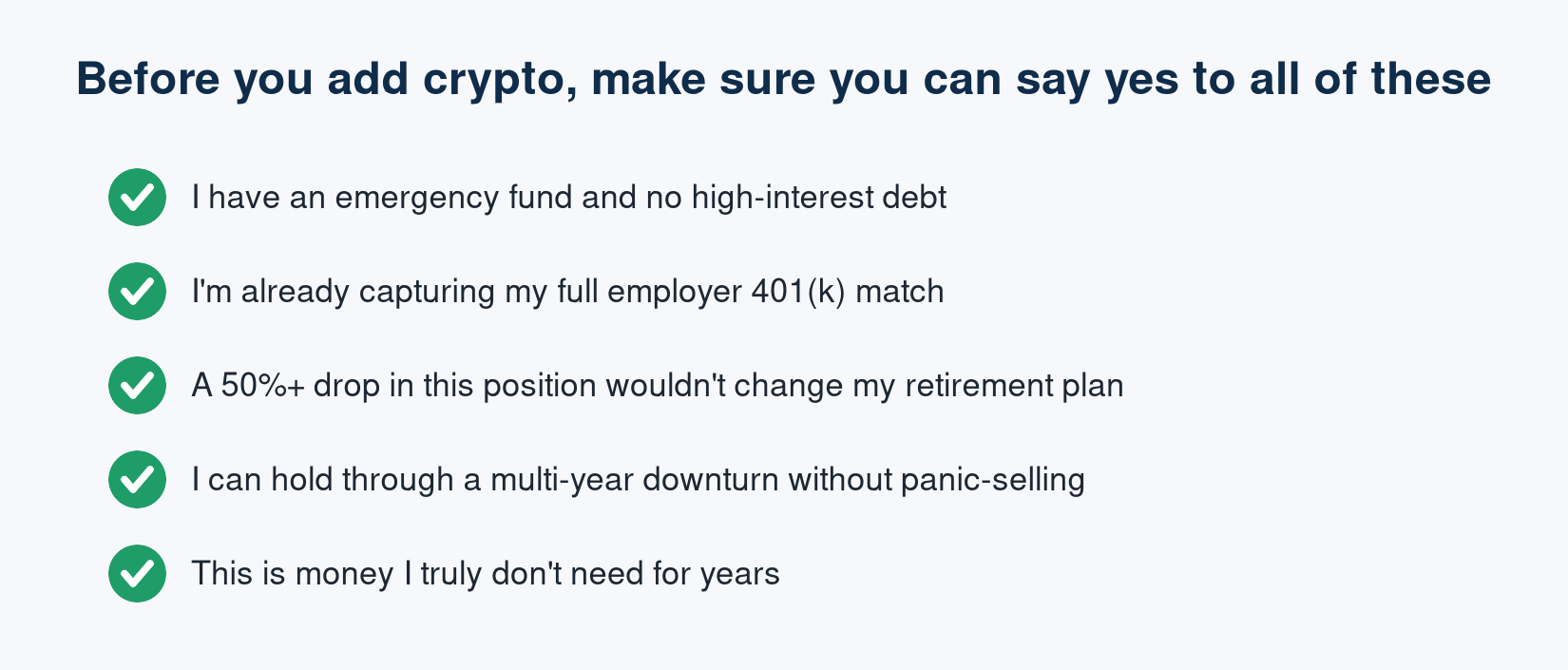
Common guardrails
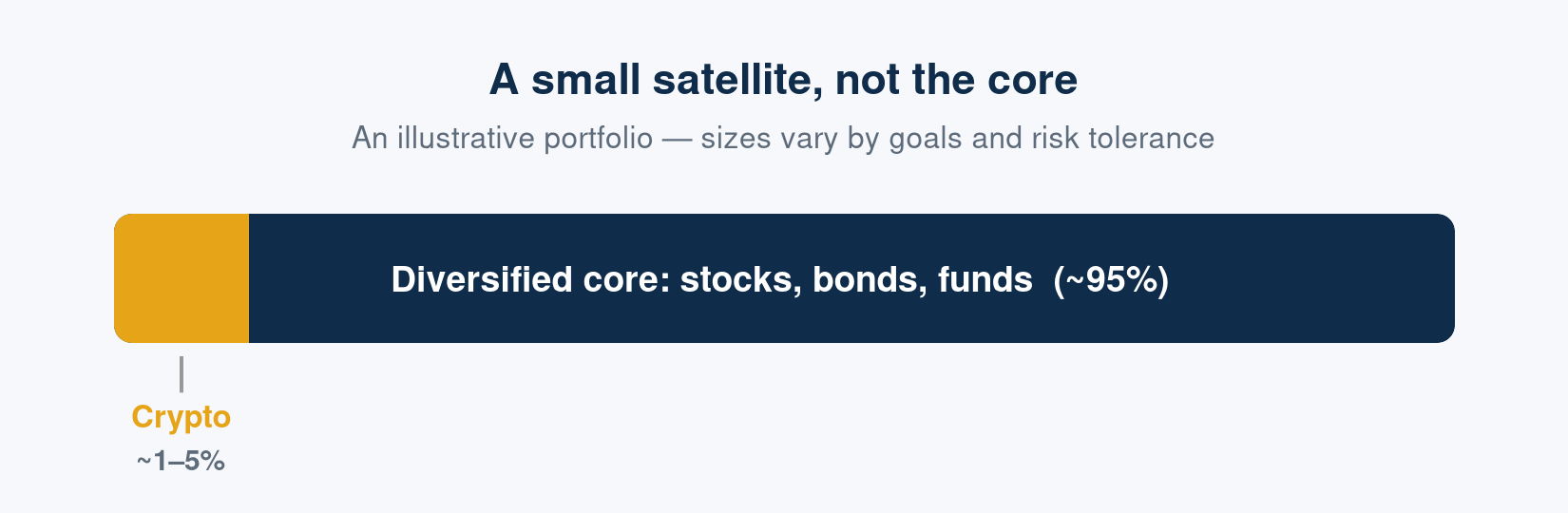
There's no official 'right' number, but a widely used range is a 1%–5% allocation for investors who want exposure, with more risk-tolerant investors occasionally going somewhat higher. The point of a small satellite position is that it can meaningfully help returns if crypto does well, while a total loss wouldn't sink the portfolio.
Let your age and stage guide the size
Time changes everything. A worker decades from retirement can absorb wild swings — there's time to recover, and a small position has room to grow. Someone at or near retirement, drawing down savings, faces sequence-of-returns risk: a big loss right as you start withdrawing can do lasting damage. As you approach and enter retirement, trimming a speculative sleeve is usually wise.
Dollar-cost average in
Rather than dropping a lump sum in at one price, many investors build a crypto position gradually — a fixed amount at regular intervals. It sidesteps the impossible task of timing the market and smooths out crypto's notorious volatility.
Rebalance on purpose
Here's the discipline that separates investing from gambling: set your target percentage first, then hold to it. If crypto surges and balloons to 15% of your portfolio, rebalancing back to your target trims the winner, locks in gains, and controls risk. If it falls, rebalancing may mean topping it back up. Either way, the target — not your emotions — makes the call.
The bottom line
Treat crypto as a small, high-risk satellite orbiting a diversified core of stocks, bonds, and funds — never the core itself. Pick a percentage you can hold calmly through a crash, add to it gradually, and rebalance with discipline. This is educational information, not personalized investment advice.
Educational information only — not financial, tax, or legal advice. Crypto is volatile and speculative; consult a qualified professional about your situation.
Comments
No comments yet — be the first to share your thoughts.
Sign in or create an account to comment.