 Retirement goals
Retirement Goals for Dentists Over 50
Dentists over 50 often combine high income, significant student debt paid off late, a practice worth selling, and a physically demanding job. These are concrete, measurable retirement targets tailored to that reality.
A dental practice is a business, a job, and often the single biggest asset in the retirement plan. Over 50, the objective is to turn all three into a diversified, measurable path to retirement — and not to assume the practice sale alone will fund it.
Objective 1: measure against the benchmarks
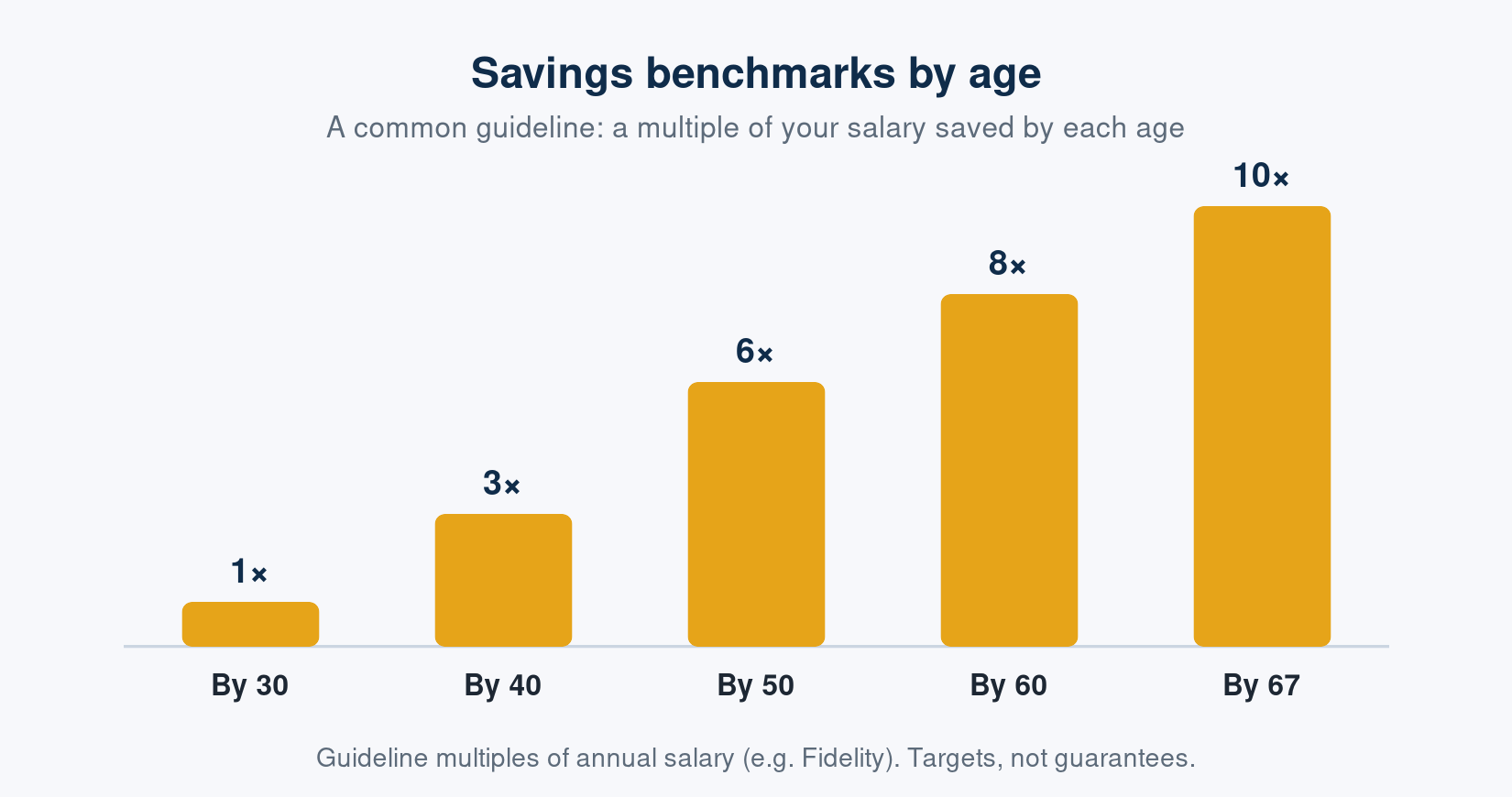
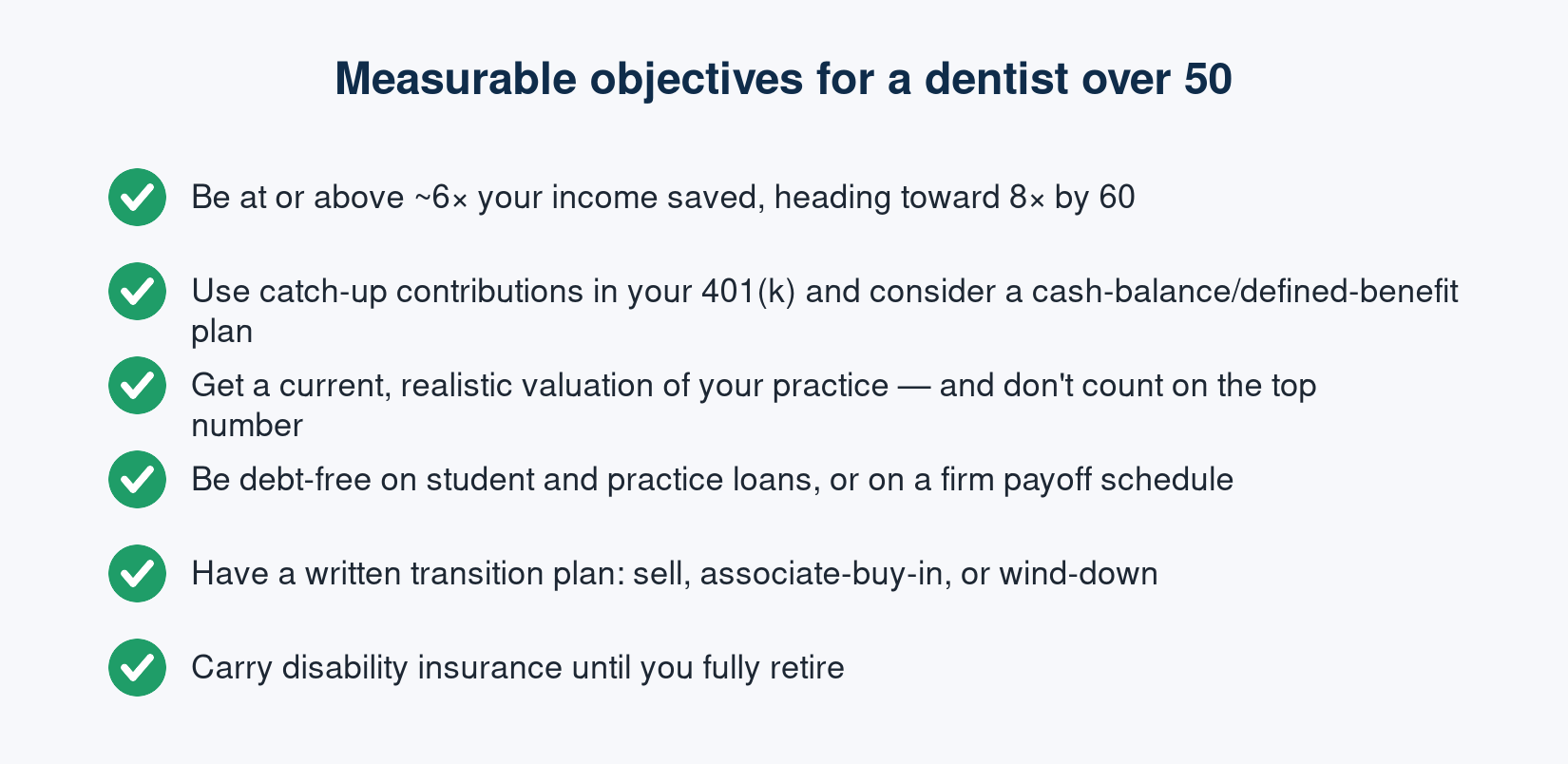
Even high earners need a yardstick. By 50, aim for roughly 6× your income saved; by 60, 8×. Because dentists often start saving late — after years of dental-school debt — many are behind these numbers at 50 and need an aggressive decade to catch up.
Objective 2: use the powerful plans available to you
High-income practice owners have options most workers don't. Beyond a maxed 401(k) with catch-up contributions, a cash-balance or defined-benefit plan can let you shelter far more from taxes each year — a serious catch-up tool in your 50s. This is worth a conversation with a specialized advisor.
Objective 3: value the practice honestly
Get a professional valuation, and treat it conservatively. Practice values depend on collections, location, and the buyer pool. A measurable objective: know the number, and make sure your plan works even if the sale comes in 20–30% below hope.
Objective 4: protect the body that earns the income
Dentistry is physically hard on the neck, back, and hands. Carry disability insurance until you're fully retired — an injury at 55 can end the earning years early. Build the plan so you could step back at 60 even if you'd prefer 65.
Objective 5: write the transition plan
Decide the exit: outright sale, an associate buy-in over several years, or a slow wind-down. Each has very different tax and timing consequences. A written plan — with dates — turns 'someday' into a measurable countdown.
Track these five objectives yearly, and your retirement stops depending on a single hoped-for practice sale.
Educational information only — not financial, tax, or legal advice. Figures are illustrative; verify against your own accounts and consult a qualified professional.

Comments
No comments yet — be the first to share your thoughts.
Sign in or create an account to comment.