 Data & limits
How Much Should You Have Saved for Retirement by Age?
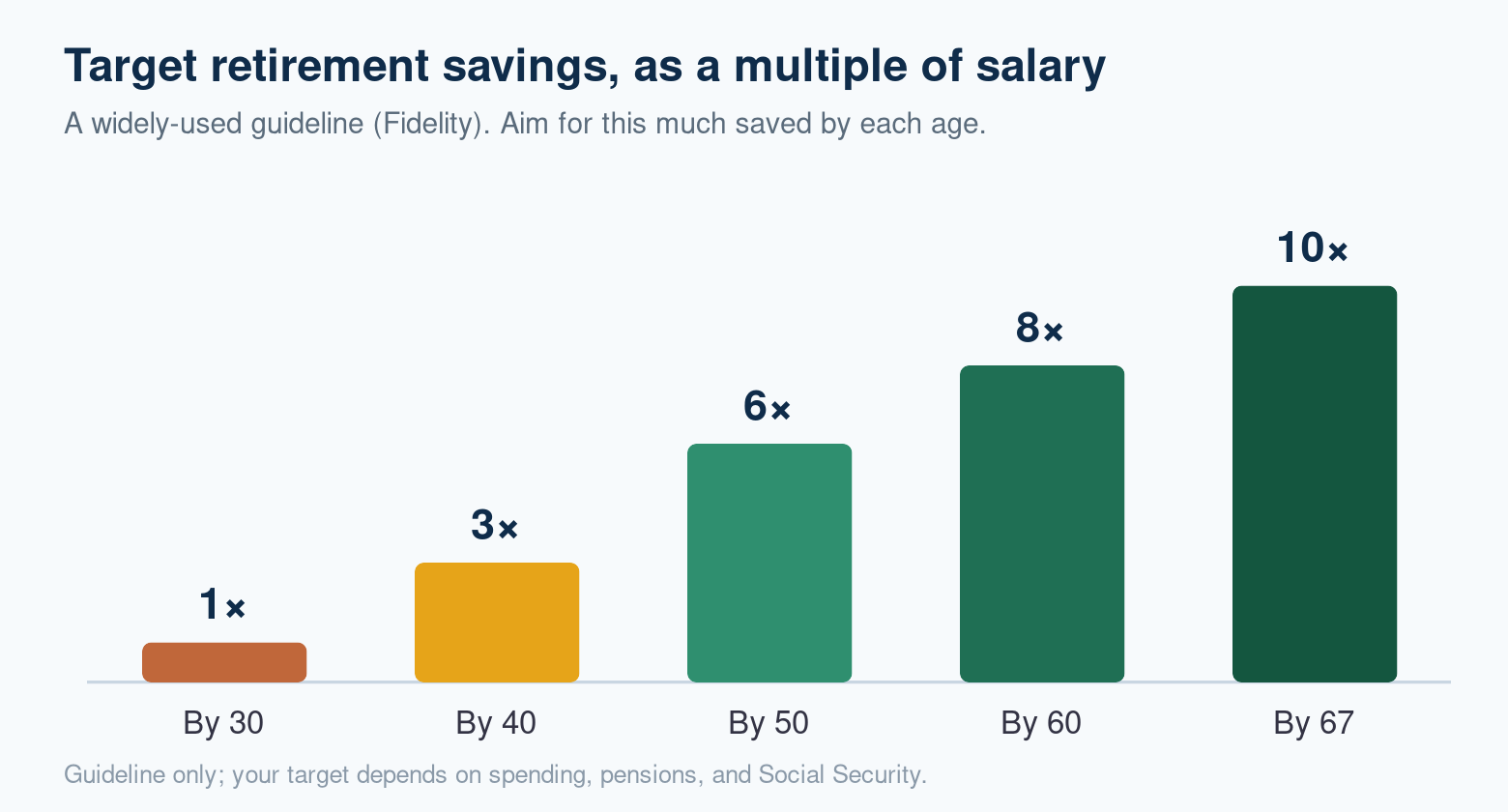
‘How much should I have saved by now?’ is the most-searched retirement question — so here’s a clear, widely-used answer. The most common benchmark (from Fidelity) expresses your target as a multiple of your salary at each age.
The benchmarks in dollars
| Age | Target multiple of salary | Example if you earn $70,000 |
|---|---|---|
| 30 | 1× | $70,000 |
| 35 | 2× | $140,000 |
| 40 | 3× | $210,000 |
| 45 | 4× | $280,000 |
| 50 | 6× | $420,000 |
| 55 | 7× | $490,000 |
| 60 | 8× | $560,000 |
| 67 | 10× | $700,000 |
What the guideline assumes
- You save around 15% of income (including any employer match) starting in your 20s.
- You retire around 67 and want to roughly maintain your lifestyle.
- Social Security covers part of your income, so your savings cover the rest.
- These are multiples of salary saved, not a required nest egg for everyone — someone with a pension or lower spending needs less.
How to read it if you’re behind
Most people are behind at least one benchmark — that’s normal, not failure. The multiples are a nudge, not a verdict. The levers that close the gap are the same at any age: raise your savings rate, capture the full match, use catch-up contributions after 50, and delay retirement a year or two (which both adds savings and shrinks the years you need to fund).
Educational information only, not financial or tax advice. Figures are current for the tax/plan year noted and can change — always confirm the latest at the official source (IRS.gov, SSA.gov, or your plan) before acting.

Comments
No comments yet — be the first to share your thoughts.
Sign in or create an account to comment.