 Retirement goals
What Is the Best Retirement Age?
There's no single best retirement age, but there are clear, measurable trade-offs at each common age. This breaks down what changes for your Social Security, Medicare, savings, and taxes at 62, 65, 67, and 70.
'When should I retire?' has no universal answer — but the choice is less about a magic number and more about a series of concrete trade-offs that flip at specific ages.
Age 62: the earliest, but the smallest check
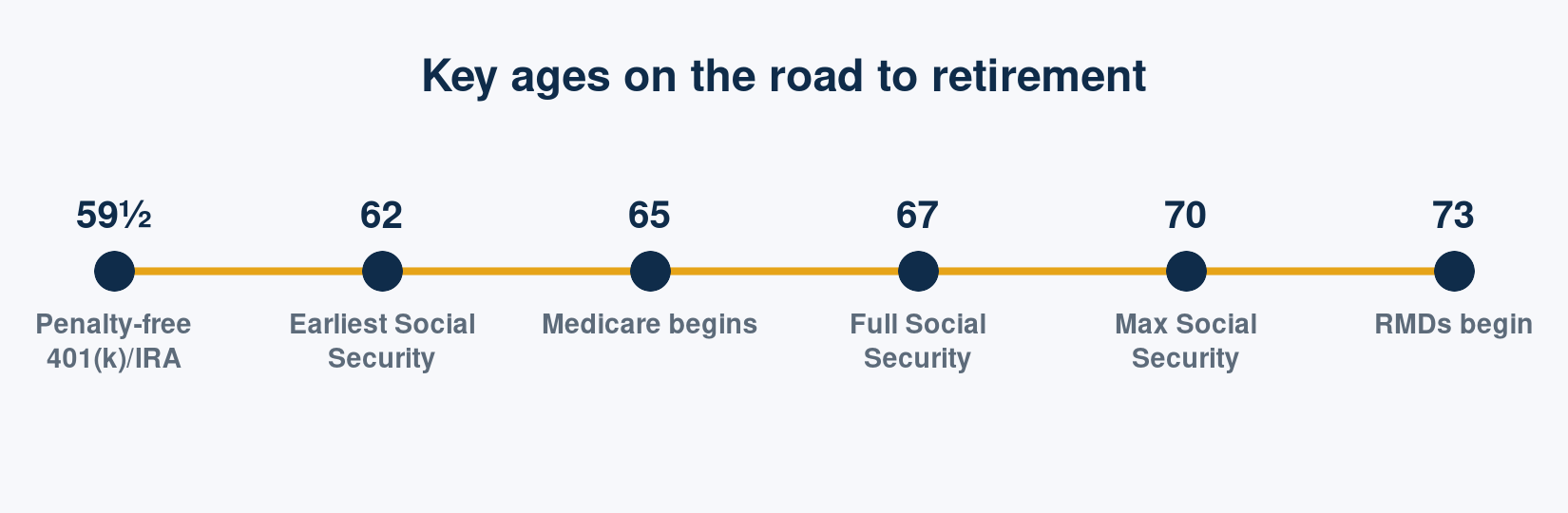
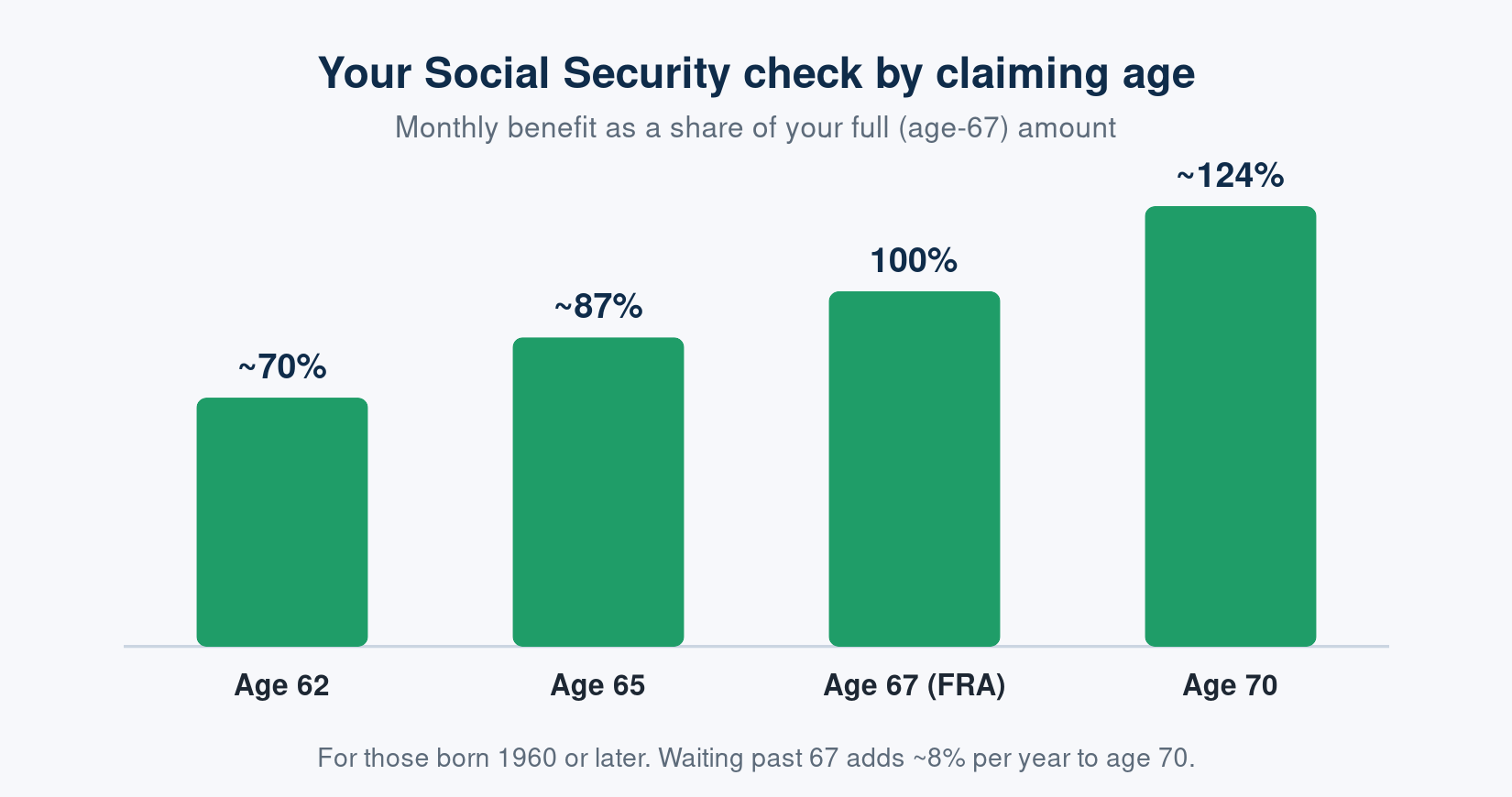
62 is the earliest you can claim Social Security — but doing so permanently reduces your benefit to roughly 70% of what you'd get at full retirement age. It can be the right call for health reasons or if you need the income, but the cut is for life.
Age 65: Medicare, but not full Social Security
65 is when Medicare begins — a major milestone, since health coverage is one of retirement's biggest costs. But for anyone born in 1960 or later, full Social Security isn't until 67, so claiming at 65 still means a reduced check.
Age 67: full retirement age
For those born in 1960 or later, 67 is 'full retirement age' — you get 100% of your calculated Social Security benefit. It's the natural default for many people.
Age 70: the maximum check
Every year you delay past full retirement age adds about 8% to your Social Security benefit, up to age 70 — roughly 124% of your full amount. There's no reason to wait past 70. If you can bridge the gap with savings and expect a long life, delaying is one of the few guaranteed, inflation-adjusted 'raises' available.
So what's best for you?
- Health and family longevity: shorter horizon favors claiming earlier; longer favors waiting.
- Savings: more savings means more freedom to delay Social Security for a bigger check.
- Do you love the work? Working longer boosts savings, delays withdrawals, and can raise your benefit all at once.
- Coverage: retiring before 65 means solving health insurance until Medicare kicks in.
The best retirement age is the earliest one at which your plan still works for a long life. Use the ages above as the checkpoints, not the finish line.
Educational information only — not financial, tax, or legal advice. Figures are illustrative; verify against your own accounts and consult a qualified professional.

Comments
No comments yet — be the first to share your thoughts.
Sign in or create an account to comment.