 Retirement goals
What Retirement Plans Are — and How to Set and Achieve Them
'Retirement plan' means two things: the accounts (401(k), IRA, Roth, pension, HSA) and the actual plan for using them. This covers both — what each account does, and a repeatable system to set goals and hit them.
The phrase 'retirement plan' does double duty. It means the accounts you save in — and it means the actual plan for reaching your goals. You need both.
Part 1: the account types
Each retirement account is a container with its own tax rules. The main ones:
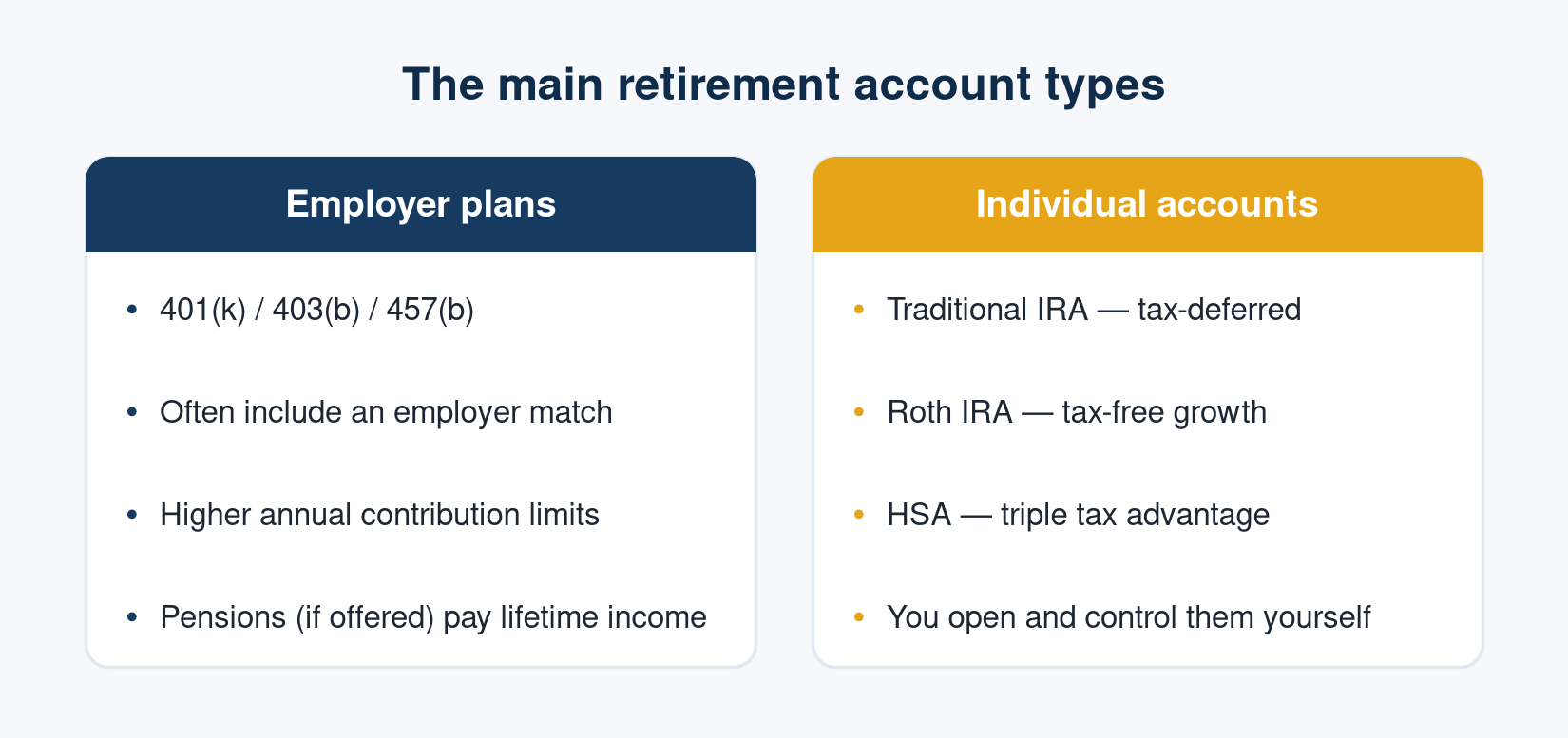
- 401(k)/403(b)/457(b): workplace plans with high limits and often an employer match.
- Traditional IRA: tax-deferred; you pay tax on withdrawals later.
- Roth IRA: after-tax now, tax-free qualified growth later.
- HSA: with a high-deductible health plan, a triple-tax-advantaged stealth retirement account.
- Pension: if you're lucky enough to have one, guaranteed lifetime income.
Part 2: turning accounts into a plan
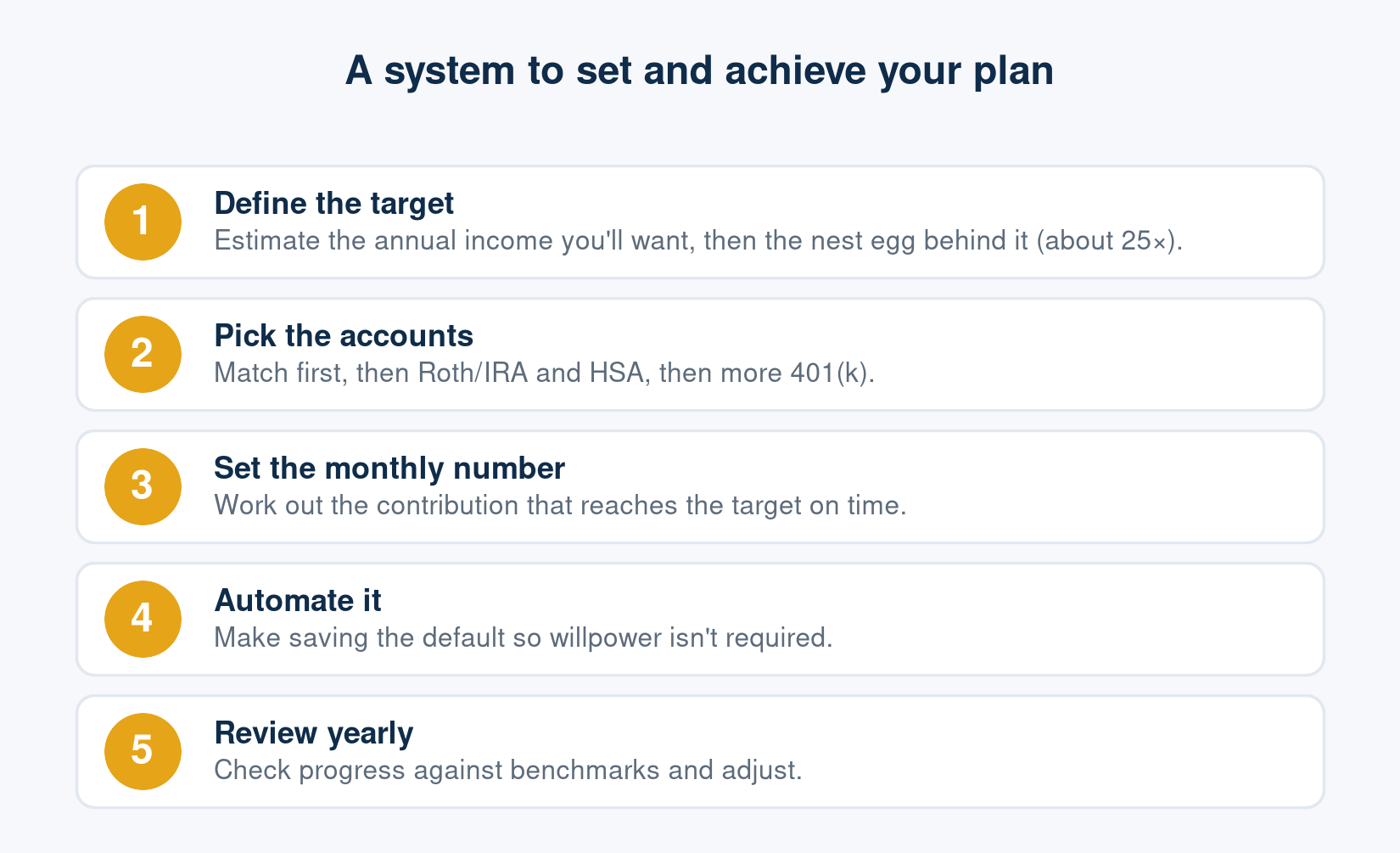
Owning the accounts isn't a plan any more than owning a hammer is a house. A plan is a target, a monthly number, and a habit. Here's a repeatable system:
Set the target
Estimate the annual income you'll want in retirement, subtract what Social Security and any pension will cover, and multiply the remainder by about 25 (the 4% rule). That's the nest egg your savings need to build.
Fund it in the right order
Capture the full employer match first, then fund a Roth or IRA and an HSA, then put more into the 401(k). This 'order of operations' gets you the highest-value dollars first.
Automate and review
Set contributions to happen automatically, increase them a little each year, and review progress annually against age-based benchmarks. Automation beats willpower, and a yearly check keeps the plan honest.
Accounts are the tools; the system is the plan. Put the two together and 'retirement plan' stops being a vague worry and becomes a number you're steadily hitting.
Educational information only — not financial, tax, or legal advice. Figures are illustrative; verify against your own accounts and consult a qualified professional.

Comments
No comments yet — be the first to share your thoughts.
Sign in or create an account to comment.